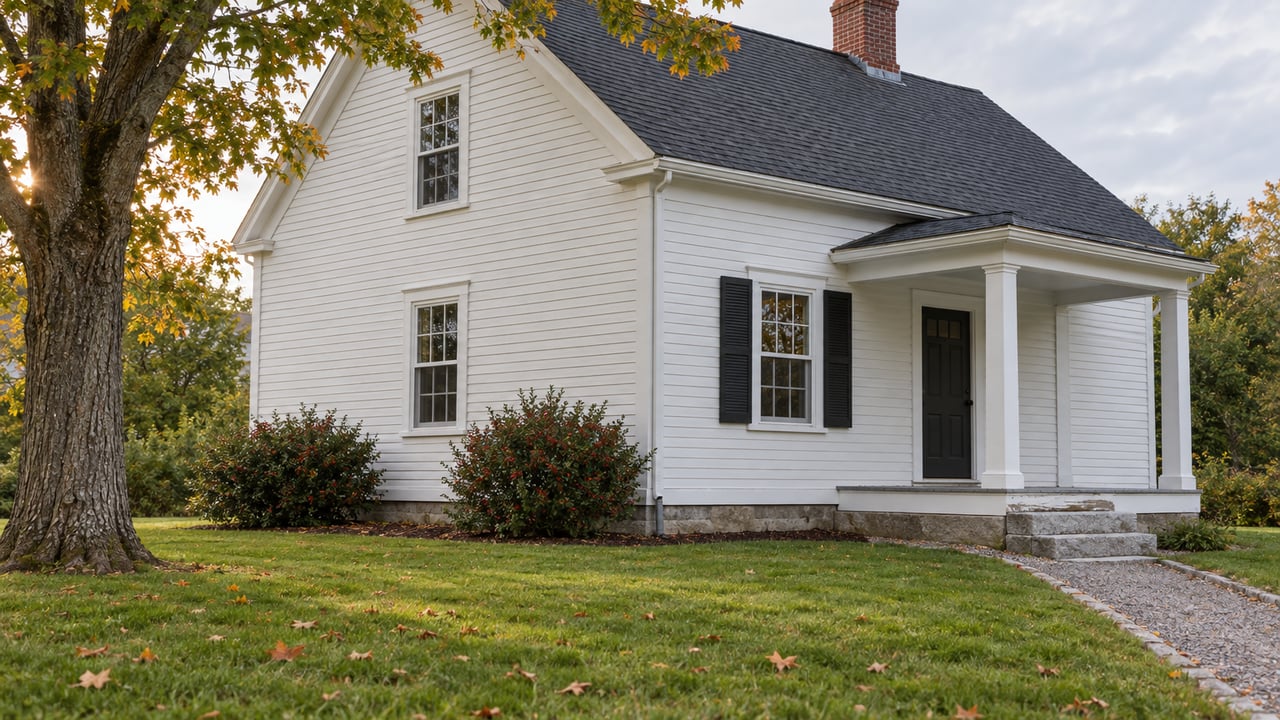
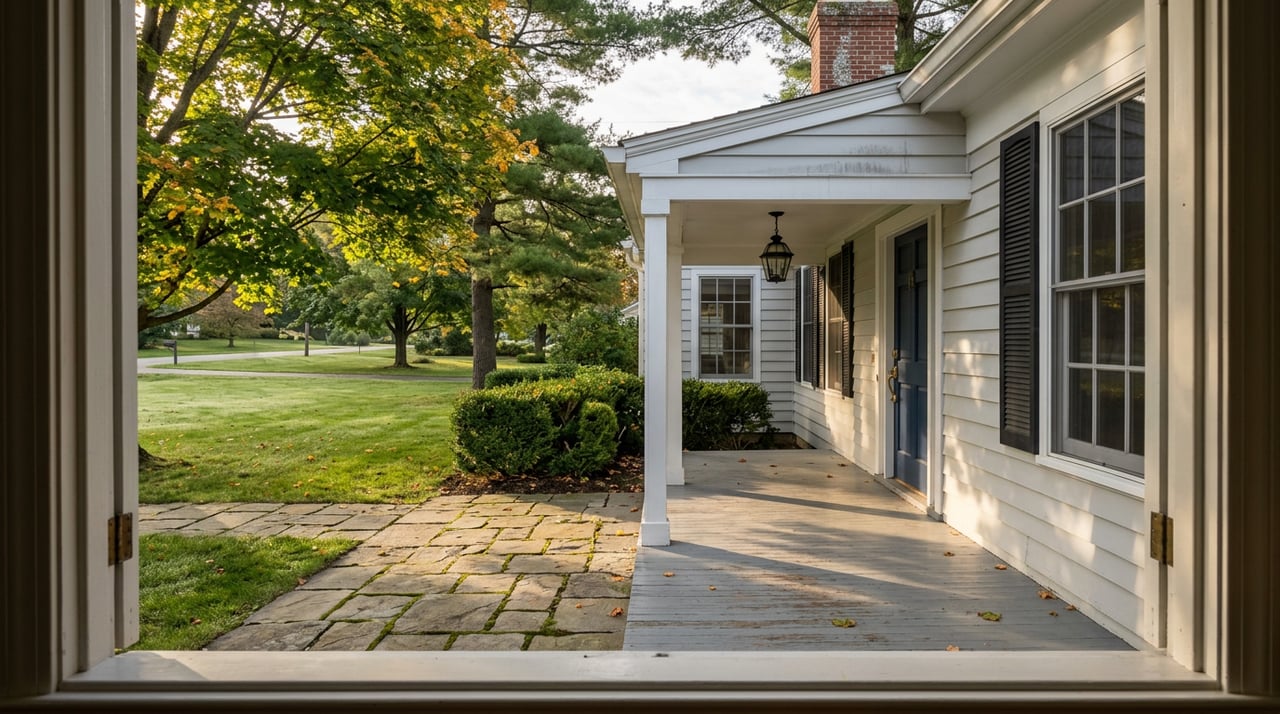
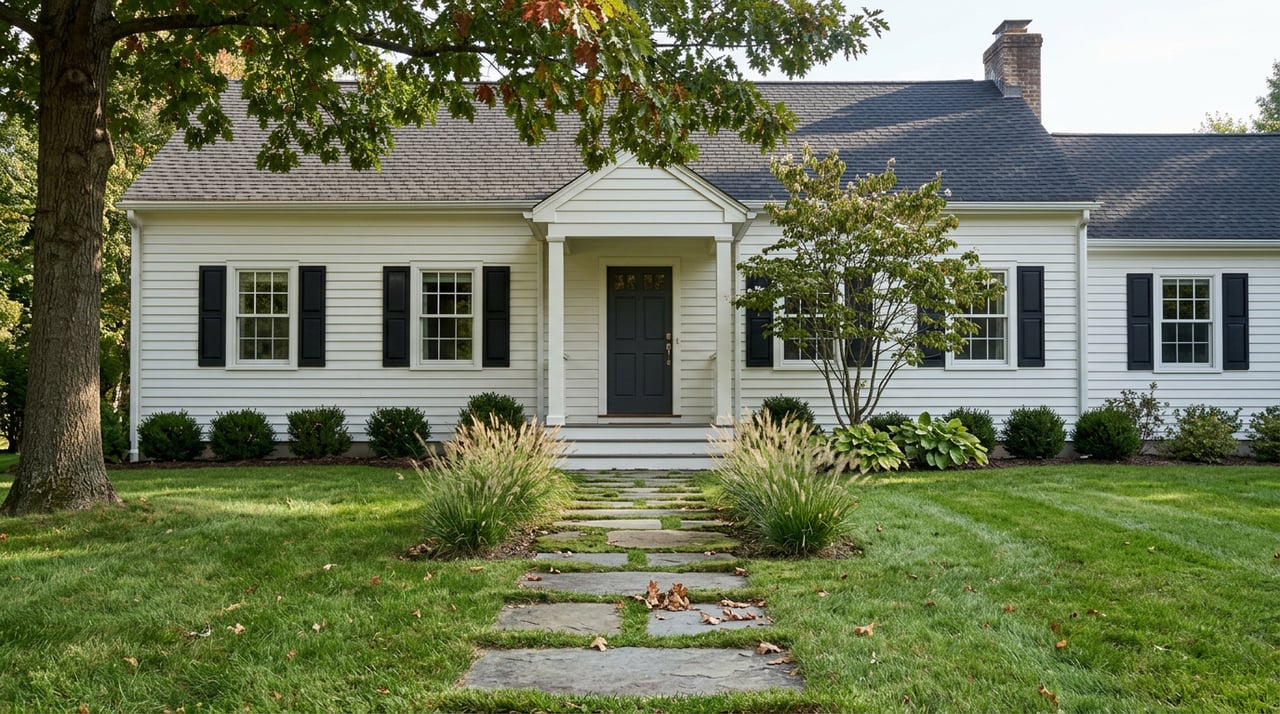
A buyer comparing two nearly identical three-bedroom capes, one in Chelsea and one across the town line in Augusta, will eventually pull up each town's mill rate to see which one costs less to own. That instinct is reasonable. It is also, right now, exactly backward, and Augusta just proved it in the most public way possible.
Reporting from April 2026 laid out why: Augusta's city government was moving its property tax mill rate down from $24.40 to roughly $17 per thousand dollars of assessed value as part of the budget process for the fiscal year that began July 1, 2026. Read on its own, that looks like a tax cut. The reason behind it tells a different story. The city's assessed home values had fallen so far behind actual market prices that the state required a fix. Under Maine law, a town's assessed values have to sit at or above 70% of real market value, and Augusta's residential assessments had drifted down to about 43%, making a revaluation mandatory rather than optional. The average taxed home value in the city was projected to climb from $135,881 to roughly $265,000, and city officials estimated that a homeowner caught in that shift could pay about $1,200 more per year even after the rate drops. A lower rate on a much higher assessed value adds up to a bigger bill for a meaningful share of Augusta owners.
That's the mechanism buyers miss when they shop by rate alone. A mill rate is only half an equation. The other half is what percentage of a home's real market value the town is actually taxing. Compare two rates without knowing the assessment ratio behind each one, and you're comparing numbers that don't measure the same thing.
What that means for a buyer looking at Chelsea instead
Chelsea sits directly across the town line from Augusta, bordered by Hallowell to the west, Farmingdale to the southwest, and Randolph and Pittston to the south. It was incorporated in 1851 out of a piece of Hallowell, and it has run its own local assessment ever since, separate from Augusta's larger municipal system.
Property tax data compiled by Ownwell puts Chelsea's current effective property tax rate at about 1.69% of assessed value, noticeably higher than the national median of roughly 1.02%. On the surface, that sounds like Chelsea is the more expensive town to own in. But an effective rate that high is landing on home values that are much lower than Augusta's post-revaluation numbers. Chelsea's median home listing price sat at $324,000 as of April 2026, according to market data, with homes spending a median of 69 days on the market, a 35% drop in time-to-sale compared to April of the previous year. A separate twelve-month tracking period put Chelsea's median sale price at $323,500, essentially flat compared to the prior twelve months. Put a 1.69% rate on a home in the low $300,000s and the resulting bill still lands in a moderate range, not a punishing one. Ownwell's own tax bill breakdown for Chelsea backs that up: the median annual bill sits below the national median of $2,400, with a 25th percentile bill of $1,687 and a 90th percentile bill of $3,909.
For broader context, Kennebec County's most recent county-level tax data (compiled by SmartAsset) shows a median annual property tax bill of $2,808 on a median home value of $281,200, an effective rate near 1.00%. That county-wide number will shift once Augusta's revaluation is fully reflected in the tax rolls, since Augusta is one of the county's largest tax bases. Chelsea's numbers, set independently by its own local assessment process, aren't tied to that swing.
Here's the comparison in one place:
| Chelsea | Augusta | |
|---|---|---|
| Recent effective tax rate | About 1.69% | Rate falling, but assessed values roughly doubling |
| Median home value (2026) | $323,500 to $324,000 | Average taxed value rising to about $265,000 |
| What's driving the number | Independent local assessment on a lower home value base | State-mandated revaluation correcting a 43%-of-market assessment |
The takeaway isn't that Chelsea is cheap and Augusta is expensive. It's that Chelsea's number is the more stable one to plan around right now, because it isn't in the middle of a correction.
The trade-off nobody puts on the listing sheet
Chelsea's lower price point comes with a structural reason behind it, not just a smaller town's discount. The town is almost entirely residential, with ranch and raised-ranch homes common on lots that frequently run an acre or more. There's no dense in-town commercial core the way Augusta or Hallowell has one. Most Chelsea properties run on private wells and septic systems rather than municipal water and sewer, which is standard for rural central Maine but worth confirming early. A well and septic system that hasn't been inspected in years can turn into a negotiating point or a repair bill after an accepted offer, so buyers comparing a Chelsea listing to an in-town Augusta or Hallowell property should ask for septic and well documentation as part of due diligence, not as an afterthought.
Schooling runs through Regional School Unit 12, with Chelsea Elementary School serving younger students in town and Gardiner Area High School serving the secondary grades. The University of Maine at Augusta sits about nine miles north, close enough for a regular commute.
What's actually in Chelsea
Chelsea doesn't have a downtown strip the way some of its neighbors do, but it has a handful of specific, long-running local spots that give the town its own identity rather than functioning purely as an Augusta suburb. Crystal Falls dance hall, Mughal Palace for Indian cuisine, and Deb's Ice Cream cover the town's social and dining scene, while Olde Haven Farm supplies fresh produce and handmade goods locally. Outdoor recreation centers on Butternut Park and Togus Pond, both used for fishing and kayaking. The town's northern section is home to the historic Togus VA campus, which anchors that end of Chelsea in a way most residential-only towns don't have. Chelsea marked its 175th anniversary in August 2025 with live music, food vendors, and family-friendly events, a milestone that reflects a town old enough to have its own settled identity rather than one defined entirely by what it isn't.
Questions worth asking before comparing two towns on tax alone
- What is the town's current assessment ratio, meaning how close its assessed values sit to real market value? A rate that looks low on a town assessing at 50% of market value can produce a bigger bill than a higher rate on a town assessing near 100%.
- Has the town completed a recent revaluation, or is one pending? A pending revaluation, like Augusta's, means the number on today's listing sheet may not hold for long.
- For any home outside a dense in-town lot, what's the age and condition of the well and septic system, and is there documentation available?
- Does the school district assignment match what you expect? Chelsea's secondary students attend Gardiner Area High School rather than an in-town Chelsea high school, which matters for families cross-shopping towns with their own full K-12 systems.
Is a lower mill rate always a better deal? No. A mill rate only tells you the tax per thousand dollars of assessed value. Without knowing how close that assessed value sits to actual market value, two towns' rates aren't directly comparable, which is exactly what Augusta's 2026 revaluation is demonstrating in real time.
Why does Chelsea run its own assessment separately from Augusta? Chelsea has operated as its own incorporated town since 1851 and, like most Maine municipalities, sets its own local tax rate and assessment schedule independent of neighboring towns, even ones it borders directly.
Comparing two towns on tax rate alone is the fastest way to draw the wrong conclusion this year. If you're weighing a home in Chelsea against one in Augusta, Hallowell, or Farmingdale, the number that matters is the actual annual bill on a specific property, not the rate printed on a town's website. Hoang Realty works across Chelsea, Augusta, and the surrounding Kennebec County towns every week and can walk through the real math on any listing you're considering, well before you're standing in a closing meeting learning about it for the first time. Start Your Search when you're ready to see what a specific address actually costs to own.