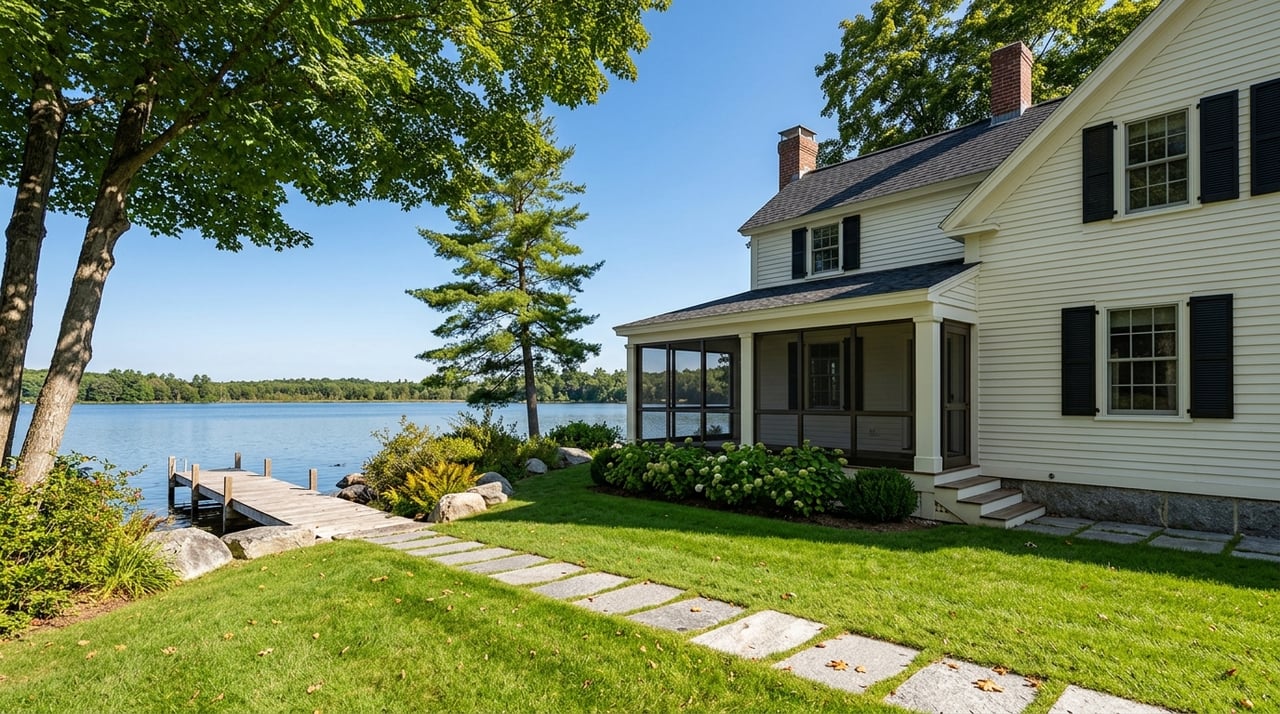
Dreaming of coffee on the dock and sunset cruises on Cobbosseecontee Lake, but not sure where to start? Buying on the water feels different from a typical purchase, and the details matter. In this guide, you’ll learn realistic price ranges, the shoreland rules in Manchester, what to check for docks, septic and wells, and a quick pre-tour checklist to help you move fast on the right home. Let’s dive in.
Why Manchester and Cobbossee Lake
Big-lake benefits
Cobbosseecontee Lake spans roughly 5,200 to 5,500 acres, so you get a wide mix of shoreline types, coves, and open water for boating and paddling. Large lakes often include both quiet stretches and busier zones near public access points. Expect variety in frontage, from rocky ledge to small sandy pockets, plus a range of views and sun exposure.
Market snapshot
Manchester’s overall housing market is more affordable than many lakefront listings. The town’s 2023 median home price was reported at $325,000, which is a helpful baseline for non-waterfront homes. You can review the town’s housing profile for context in the Manchester housing report.
Lakefront prices on Cobbossee vary widely. Recent aggregated examples show modest cottages and lots starting in the low-to-mid hundreds of thousands, with many renovated or year-round homes asking in the mid- to upper-hundreds, and select properties at $1M or more. For a current snapshot of active listings, scan the Cobbosseecontee Lake listings aggregator. Inventory on the lake is often thin, so being prepared helps you act quickly when the right place appears.
Shoreland zoning rules in Manchester
State baseline
Maine has a statewide shoreland zoning program, implemented locally by each town. The rules exist to protect water quality, prevent erosion, and maintain vegetation buffers. If you are buying near the water, expect setbacks and limits on clearing, plus standards for septic and construction within the zone. For a clear overview, review the Maine DEP shoreland zoning guidance.
Manchester specifics to know
Manchester’s Land Use and Development Ordinance applies shoreland standards to properties within 250 feet of the normal high-water line of great ponds and within 75 feet of streams. The ordinance also includes dock and pier standards, including where structures can extend from the shore and how they must be built to avoid erosion or interference with neighbors. Always verify that any existing dock is permitted and that past work met town and state rules. You can read the full standards in the Manchester Land Use and Development Ordinance PDF.
Dock permits and NRPA
Work below the normal high-water line often triggers state review under the Natural Resources Protection Act. Many small replacements or repairs qualify for Permit-by-Rule if they meet the state standards. Larger or permanent structures generally require more review. Ask the seller for copies of any DEP permits or PBR filings. You can see the PBR section for docks in DEP’s Section 16 document.
Docks, launches and moorings
Public access points and marinas shape boat traffic and weekend activity. To understand navigation and hazard markers, consult the Cobbosseecontee Lake Association buoy chart. Nearby public launches help residents get on the water but may also increase traffic near those areas. Your agent can help you gauge how a specific property’s cove or shoreline feels on busy days.
Mooring and slip rules vary by town and location. Some areas use assigned or managed moorings through local authorities. If a listing advertises a dock, slip, or mooring, ask for written proof of permits or permissions and confirm whether any use is shared or limited to a season.
Practical dock due diligence:
- Ask for local dock permits and any DEP PBR or DEP permits for installation or repairs.
- Request any recorded easements if dock access is shared.
- Review recent photos or aerials to confirm the current footprint aligns with permits.
- Verify seasonal removal and storage plans, plus any hardware ownership details.
Septic and well essentials for lake homes
Septic systems and code checks
Maine’s Subsurface Wastewater Disposal Rules set septic design and operation standards. A 2023 update added useful clarity for seasonal conversions and system components. Many older camps will not have systems sized for year-round occupancy. Before you buy, request the septic permit and as-built, ask for pump-out records, and consider an evaluation if the condition is unknown. Read more in the Maine Subsurface Wastewater Rules.
Manchester references the state rules and requires septic compliance. The town does not allow holding tanks as a first-time primary disposal method for new residential or commercial construction. System adequacy is typically verified by the Local Plumbing Inspector. Ask for documentation showing the system type, design flow, and reserve area. The local standards appear in the Manchester Land Use and Development Ordinance.
Septic steps to take:
- Request the permit and as-built drawing, plus any repair history.
- Ask for recent pump-out receipts and service records.
- Consider a dye test or licensed evaluation if records are incomplete.
- Confirm a feasible reserve area exists for future replacement.
Private wells and water quality
Private wells are not regulated as public water systems in Maine, so regular testing is essential. At minimum, test for total coliform and E. coli and nitrate. Consider expanded testing for arsenic, radon in water, or PFAS if indicated by local conditions. The Maine CDC offers guidance for private well owners. Start with the Private Well Water safety page.
Well drillers and pump installers are licensed, and well completion reports are filed with the state. Ask the seller for the driller’s report, well depth, static level, yield, and any treatment records. Learn more about licensing and reporting at the Well Drillers’ Commission.
Well steps to take:
- Request the driller’s log and any pump test results.
- Order lab tests for bacteria and nitrate, then add metals or PFAS as needed.
- Budget for filtration if test results recommend treatment.
Camp vs. year-round living
Seasonal camps often have lighter foundations, limited insulation, and simpler plumbing and heating. Year-round homes are built for Maine winters and usually have full foundations or frost protection, modern insulation, and reliable heat. Converting a camp can trigger upgrades under state wastewater rules and local building code.
If you plan to convert:
- Confirm whether a building permit is required and what upgrades the Code Enforcement Officer will expect for insulation, egress, plumbing, and heating.
- Review the current septic design flow versus the required flow for year-round use and consult a licensed site evaluator if upgrades are likely.
- Ask for recent utility bills and a heating system inspection to understand winter performance.
Pre-tour checklist for Manchester lake homes
Use this quick list to screen listings and 3-D tours before you schedule an in-person visit.
- Shoreline ownership and frontage: Confirm the advertised waterfront footage and whether the deed conveys to the high-water mark. Ask for the recorded deed and survey.
- Dock status: Request copies of any DEP PBR or permits and town approvals for piers, docks, or shoreline stabilization. See DEP’s Section 16 PBR standards and the Manchester LUDO dock standards.
- Septic: Ask for the permit and as-built, tank type, last pump-out, and any repair history. If records are missing, build in a contingency for inspection. Review the state septic rules.
- Well: Request the well completion report, pump test, and most recent lab results for bacteria and nitrate. Consider arsenic or PFAS testing. Start with the private well guidance.
- Flood risk and elevation: Ask for FEMA flood zone info and confirm first-floor elevation meets local standards. The Manchester ordinance outlines shoreland and elevation requirements.
- Utilities and heating: Note fuel type and equipment age. Ask whether the home is winterized for year-round occupancy.
- Photos and 3-D tours: Review floorplans, room sizes, mechanicals, and aerial shots that show distance to the shoreline. High-quality 3-D tours and floorplans help you evaluate remotely.
Local resources and next steps
Documents to request early:
- Recorded deed and survey, including any easements.
- Town permit history for building, shoreland, plumbing, and septic.
- DEP permits or PBR paperwork for docks or shoreline work.
- Septic as-built, pump receipts, and any LPI or site evaluator reports.
- Well completion report and the latest water test results.
Helpful contacts and references:
- Manchester Land Use and Development Ordinance and Code Enforcement for shoreland and permitting questions. See the town ordinance PDF.
- Maine DEP for shoreland zoning basics and NRPA Permit-by-Rule. Visit the DEP shoreland zoning page and PBR Section 16.
- Maine CDC for private well testing guidance and water professionals. Start with Private Well Water and the Well Drillers’ Commission.
Ready to find your spot on Cobbossee? Our team pairs local expertise with clear guidance and tools like complimentary 3-D tours and floorplans to help you compare properties with confidence. Reach out to Hoang Realty to start a focused, efficient lakefront search.
FAQs
What should I budget for a Cobbosseecontee lakefront home in Manchester?
- Expect a wide range. Modest camps can list in the low-to-mid hundreds of thousands, while many renovated or year-round homes ask in the upper-hundreds to $1M or more. Inventory changes quickly.
What is the shoreland zone and how close can I build?
- In Manchester, shoreland rules apply within 250 feet of great ponds and 75 feet of streams. Setbacks, clearing limits, and septic siting standards apply. Always verify with the town before planning work.
Do I need a permit for an existing or new dock?
- Many repairs or small replacements can qualify under DEP Permit-by-Rule if they meet standards. Larger or permanent structures often need more review. Ask for all town and state permits on file.
How do I check a lake home’s septic and well?
- Request the septic permit and as-built, pump records, and any inspections. For wells, get the driller’s log and recent lab results for bacteria and nitrate, plus expanded tests if indicated.
Can I convert a seasonal camp to year-round use?
- Often yes, but expect code and wastewater upgrades. Plan for insulation, heating, and possible septic redesign. Check with the town’s CEO early to understand requirements.
Where can I see boating hazards and access points on Cobbossee?
- Use the lake association’s buoy chart to understand markers and navigation. Ask your agent about nearby public launches and how weekend activity might affect a specific cove.