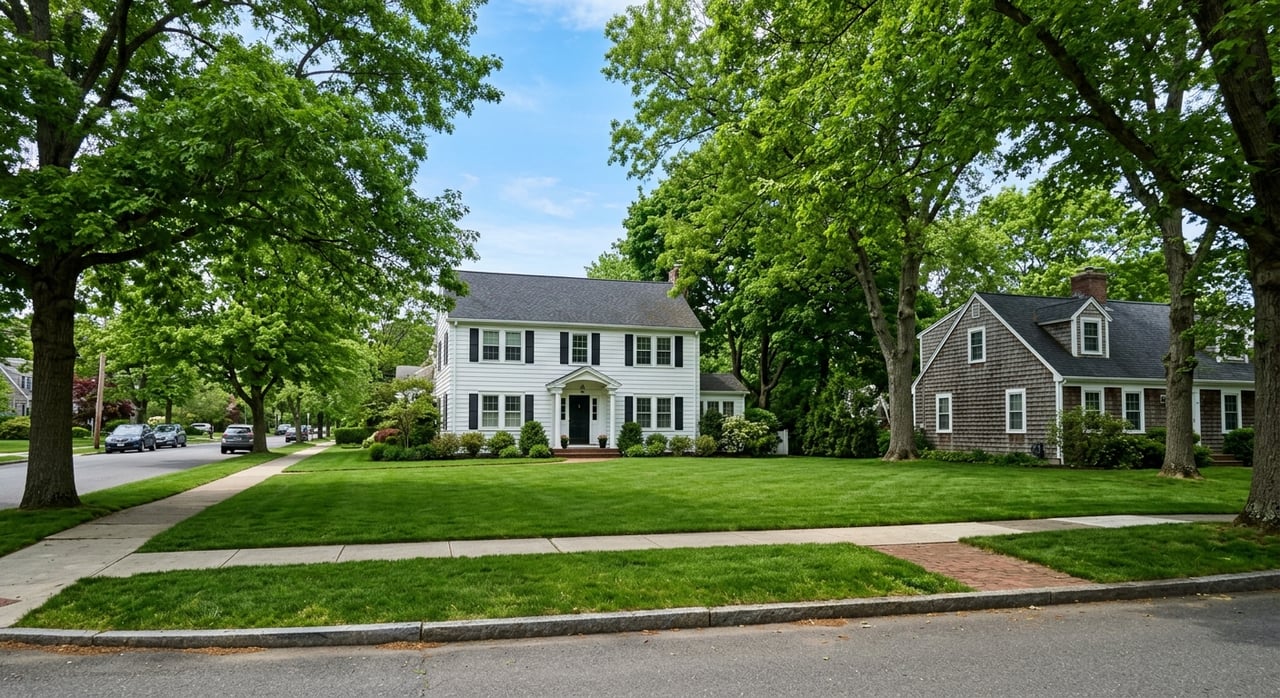
Wondering what it’s actually like to buy a home in Farmingdale? This small Kennebec County town can be easy to underestimate, especially if you assume it has one clear neighborhood map or one dominant home style. In reality, Farmingdale offers a mix of river-corridor homes, subdivision pockets, and more rural properties with larger lots. If you want to understand how those areas differ, this guide will help you compare location, housing style, lot character, and what that could mean for your search. Let’s dive in.
How Farmingdale Is Laid Out
Farmingdale is best understood as a corridor town rather than a place with one compact neighborhood grid. The town sits on the west bank of the Kennebec River, just north of Gardiner and about 2 miles south of Augusta, with more developed riverbank areas and more open back-land farther out.
That pattern matters when you start house hunting. Instead of comparing one neighborhood to another in a traditional city layout, you are often comparing road corridors, subdivision pockets, and rural edge roads with very different feels.
Maine Avenue Corridor Homes
The Maine Avenue corridor is one of the clearest residential areas for buyers to understand. The town’s planning documents treat part of Maine Avenue as a development district, while the stretch from Kennebec Drive to Northern Avenue is described as a scenic and historic district shaped by floodplain and shoreland limits.
For you as a buyer, that usually means more variety in both housing type and setting. Recent listings along Maine Avenue have included older Cape-style homes, historic single-family houses, two-unit properties, and larger multifamily buildings.
This area can appeal to buyers who want quicker access to nearby communities and a more established setting. It is also one of the few parts of Farmingdale where the housing pattern feels more concentrated than the rest of town.
What You May See on Maine Avenue
Homes and property types along this corridor can include:
- Older Cape-style houses
- Historic single-family homes
- Two-unit residential properties
- Larger multifamily buildings
If you are open to different ownership goals, this stretch may give you more than one path forward. A buyer looking for a traditional home, a property with older character, or a multi-unit opportunity may all find options here.
River Proximity and Zoning Factors
Buying near the river can come with location benefits, but it also brings more site-specific considerations. Farmingdale’s code includes separate floodplain management and shoreland zoning rules, and the town plan notes that shoreland zoning applies within 250 feet of water bodies and 75 feet of streams.
The comprehensive plan also says that Maine Avenue is where floodplain and shoreline constraints have the biggest geographic impact on development. If you are comparing homes in this corridor, it is smart to pay close attention to lot layout, expansion potential, and how the property sits in relation to these regulated areas.
Hayford Heights and East-Side Pockets
If you want a more familiar neighborhood-style setting, Hayford Heights and nearby east-side streets may stand out. The town plan identifies Hayford Heights as part of Farmingdale’s existing built-up area and points to future growth east of the Turnpike along Northern Avenue, Bowman Street, Maple Street, and Blaine Road.
Recent listings in this pocket suggest a more conventional subdivision mix than you may see along Maine Avenue. Buyers have recently found Cape-style homes, ranches, split-entry homes, and colonials on streets such as Ash Street, Easy Street, Hemlock Lane, and School House Drive.
Why Buyers Like This Area
This part of town can be a good fit if you want a neighborhood feel without leaving Farmingdale. The home styles are more familiar to many move-up and first-time buyers, and the street pattern may feel easier to compare from one listing to the next.
The town plan also references Harwood Estates as the kind of subdivision pattern that could be replicated in this general area. That supports the idea that this side of town is one of the more logical places for organized residential growth.
Common Housing Styles Here
In Hayford Heights and similar pockets, you are more likely to see:
- Ranch homes
- Cape-style homes
- Split-entry homes
- Colonial homes
That variety gives you flexibility if you are balancing layout, stairs, lot use, and long-term needs. While detached homes still dominate, this pocket may feel more predictable than the rural edge of town.
Rural Roads and Larger-Lot Homes
The west side of Farmingdale and the land east of the Turnpike south of Northern Avenue are generally classified as rural in the town plan. The plan says most new development in these areas moves slowly and is often multi-generational rather than subdivision-driven.
For buyers, that usually translates into more variation from property to property. You may see larger lots, more wooded settings, and homes with very different ages and construction styles on the same general stretch of road.
Recent examples on roads like Litchfield Road, Northern Avenue, Walker Lane, and Blt Lane or Drive have included an 1800s post-and-beam Colonial, an antique Cape, a modular ranch, and a Cape on 11 wooded acres. That is a much different inventory profile than a tighter corridor or subdivision street.
What Rural Buyers Often Get
If you are drawn to the rural side of Farmingdale, you may find:
- More acreage
- More privacy
- More wooded surroundings
- Greater variation in home age and design
This can be a strong match if you care more about space and setting than a uniform neighborhood feel. It can also mean you need to compare properties more carefully, since homes may differ widely in layout, lot shape, access, and surrounding land use.
Condo and Attached Housing Options
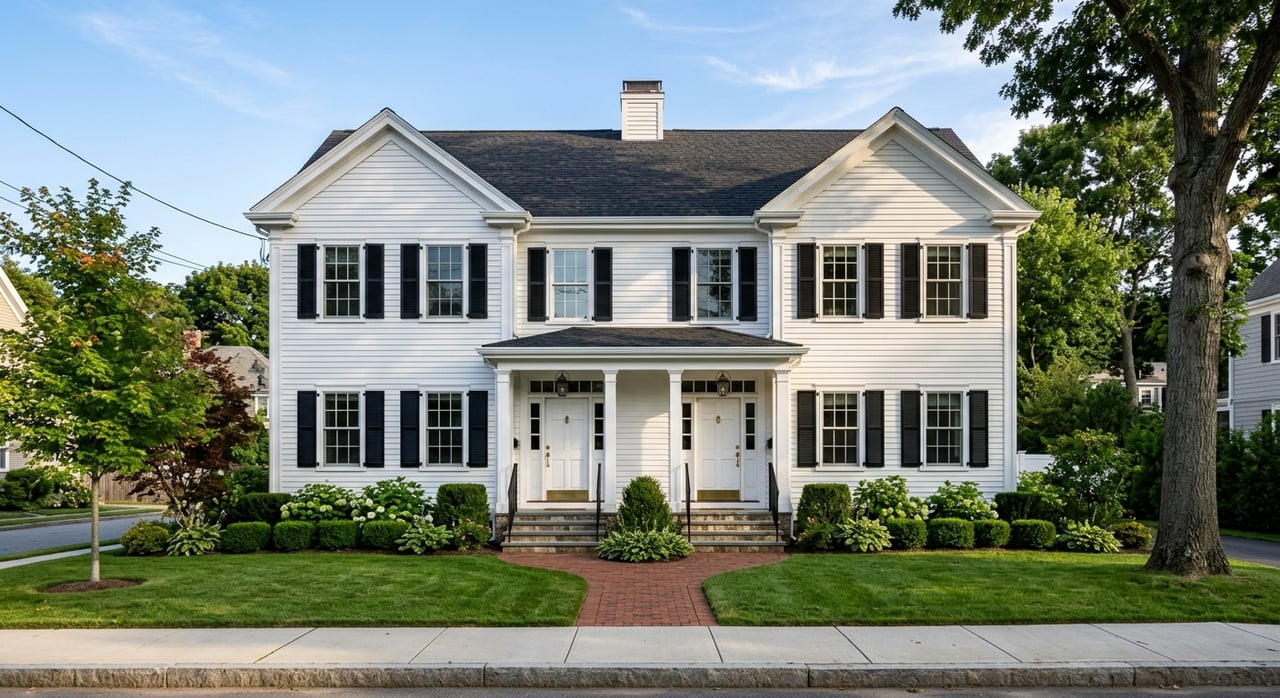
Most of Farmingdale’s housing mix appears to be detached homes. That said, there are some smaller attached-housing options, including a townhouse-style condo recently listed on Violet Drive.
For you, this is useful mainly as a reminder that condo inventory exists but appears to be a smaller part of the local market. If you are specifically shopping for lower-maintenance living, you may need to stay flexible and watch inventory closely.
Lot Sizes and Development Pattern
One reason Farmingdale often feels less dense than nearby communities is its lot standard. The town’s 2024 code update keeps a baseline minimum lot size of 3/4 acre, along with 150 feet of road frontage, 30-foot front setbacks from the right-of-way line, and 20-foot side and rear setbacks.
Those standards are more spacious than what the town plan notes for parts of nearby Gardiner and Hallowell. That helps explain why Farmingdale often reads as a larger-lot town, except in the more built-up Maine Avenue corridor.
Why This Matters to Buyers
Lot standards shape what you see on the ground. In practical terms, they support a housing pattern with more separation between homes, fewer tightly packed blocks, and a stronger suburban-or-rural feel in many parts of town.
The ordinance also allows back lots if they meet right-of-way and emergency-access provisions. So if you are looking at a home tucked off the road, access details may be an important part of your review.
Utilities and Growth Areas
The town plan says public water and sewer are concentrated in the older developed area, including Maine Avenue south to Northern Avenue. Farther-out roads remain lower density, which is part of why the housing pattern changes as you move away from the river corridor.
The same plan says future growth can be served more efficiently east of the Turnpike along Northern Avenue, Bowman Street, Maple Street, and Blaine Road. If you are thinking not just about today’s inventory but also about where the town may continue to add homes over time, that is a helpful framework.
Farmingdale Compared With Nearby Towns
If you are also considering Gardiner or Hallowell, Farmingdale may feel more spacious overall. The town plan contrasts Farmingdale’s 3/4-acre baseline lot standard with smaller lot standards in parts of Gardiner and Hallowell, which helps explain the difference in density.
That does not mean every Farmingdale home sits on a large private lot. It does mean the town’s overall pattern tends to be less compact, with the clearest exception being the Maine Avenue corridor.
A Better Way to Compare
Instead of asking which Farmingdale neighborhood is best, it helps to ask which setting fits your goals best. In this town, the most useful comparison is often:
- Corridor homes along Maine Avenue
- Subdivision pockets like Hayford Heights
- Rural roads with larger-lot properties
That lens usually gives you a clearer picture of what daily life and property type may look like from one area to the next.
What Buyers Should Focus On
When you tour homes in Farmingdale, try to look beyond price and square footage alone. This is a market where location pattern, lot character, and development rules can shape your experience just as much as the house itself.
A simple checklist can help you compare options:
- Do you want an established corridor location or a quieter rural setting?
- Are you looking for a classic Cape, ranch, colonial, split-entry, or something more unique?
- How important are acreage and privacy?
- Would you consider a two-unit or multifamily property?
- Is lower-maintenance attached housing part of your search?
- Do lot access, river proximity, or zoning constraints affect your plans?
The more clearly you answer those questions, the easier it becomes to narrow your search and move with confidence.
If you are thinking about buying in Farmingdale, the right guidance can save you time and help you spot the differences that online listings do not always explain. The team at Hoang Realty brings local market knowledge across Augusta and Kennebec County and can help you compare Farmingdale homes based on location, lot character, and long-term fit.
FAQs
What types of homes can you find in Farmingdale, Maine?
- Buyers in Farmingdale are likely to see Cape-style homes, ranches, split-entry homes, colonials, historic single-family homes, some two-unit and multifamily properties, and a smaller number of attached options like townhouse-style condos.
What is the Maine Avenue area like for Farmingdale buyers?
- The Maine Avenue corridor is one of Farmingdale’s more built-up residential areas and includes a wider mix of older homes, single-family properties, and multifamily buildings, along with site considerations shaped by floodplain and shoreland rules.
What is Hayford Heights like for homebuyers in Farmingdale?
- Hayford Heights is part of Farmingdale’s built-up east-side area and tends to offer a more conventional subdivision feel, with housing styles such as ranches, Capes, split-entry homes, and colonials.
Are there rural properties with acreage in Farmingdale?
- Yes. Farmingdale’s rural roads and edge areas often offer larger lots, more wooded surroundings, and a wider mix of home ages and styles, including antique homes and homes on significant acreage.
Why does Farmingdale feel less dense than some nearby towns?
- Farmingdale’s current code uses a baseline minimum lot size of 3/4 acre with 150 feet of road frontage, which helps create a more spacious residential pattern than areas with smaller minimum lot sizes.
Are condos common in Farmingdale, Maine?
- Condos appear to be a smaller part of the local housing mix than detached homes, though attached options such as townhouse-style condos do show up from time to time.